

28 Oct What Is Plant-Based Leather? A Complete Guide
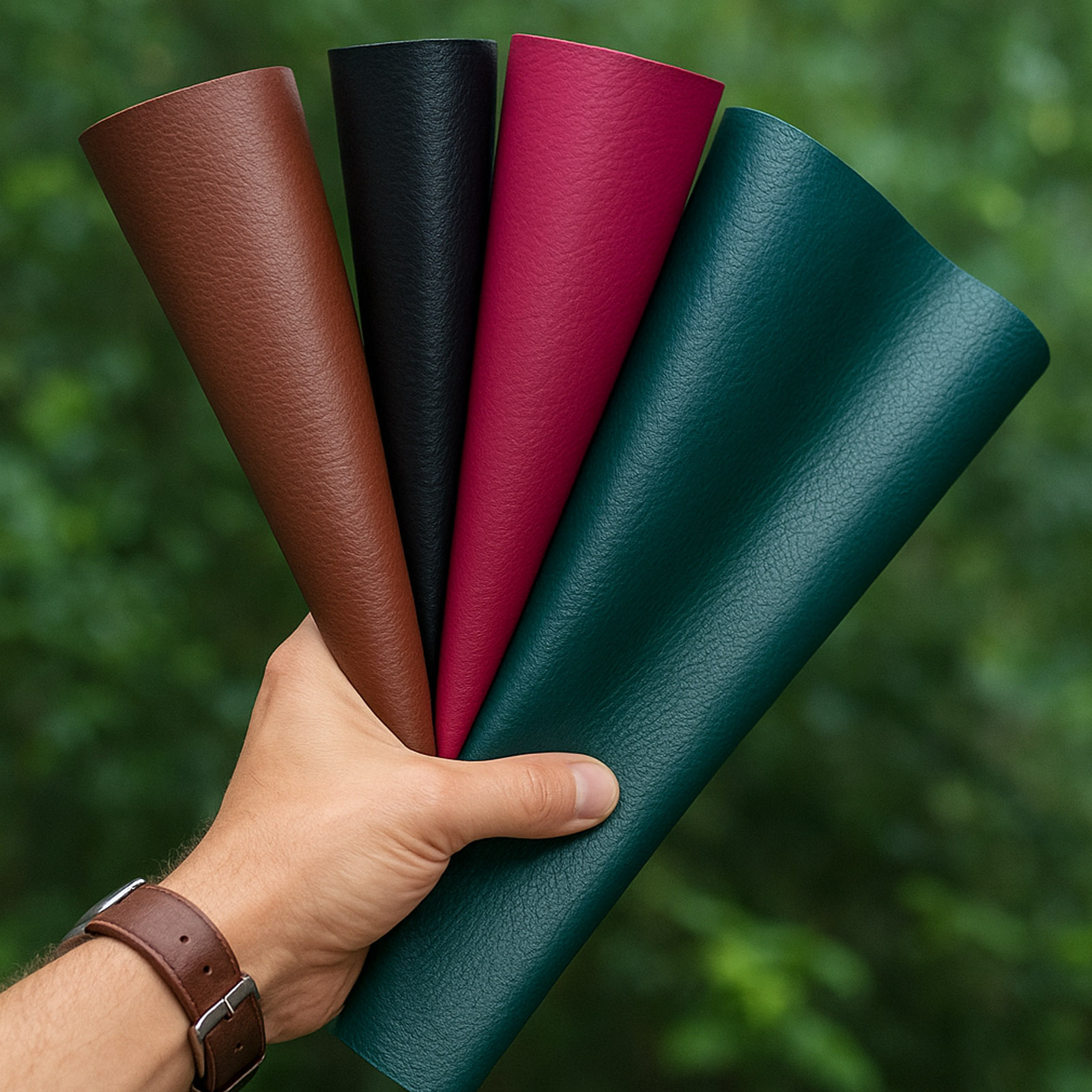
Plant-based leather is a material that looks, feels and performs like leather, but is made largely from renewable plant sources instead of animal hides or fossil-based plastics. Brands in fashion, footwear, automotive and furniture are adopting it to cut their environmental footprint, meet animal-welfare commitments and answer growing customer demand for responsible materials.
This guide covers what plant-based leather is, how it is made, how it compares with other options, and what to check before you specify one for a product.
What exactly is plant-based leather?
“Plant-based leather” is an umbrella term for leather alternatives whose main ingredients come from plants. Depending on the producer, that can mean fibres from agricultural residues, fruit waste such as apple pomace or grape marc, pineapple leaf fibre, cactus, or mycelium (the root structure of fungi, which is technically not a plant but is usually grouped in the same category).
Most plant-based leathers are composites. Plant material provides bulk, structure and texture, a binder holds it together, and a backing fabric and top coat give it the strength, flexibility and surface durability that products need. The proportion of plant-derived content varies a lot between products, which is why independent bio-based certification matters (more on that below).
How is plant-based leather made?
Processes differ, but most follow the same broad steps:
- Feedstock preparation. The plant material is collected, cleaned, dried and milled into fibres or powder.
- Compounding. The plant material is mixed with a binder system and pigments to form a workable compound.
- Coating or casting. The compound is spread onto a textile backing, often by transfer coating, and cured.
- Finishing. A protective top coat is applied, and the surface is embossed with a grain or texture.
- Testing. Finished material is tested for properties such as tensile strength, tear, flex resistance, abrasion and colour fastness.
Producers that run this as a continuous roll-to-roll process can make long, consistent rolls that slot straight into existing cutting and stitching lines.
How does it compare with animal leather and synthetic leather?
Animal leather is durable and familiar, but it is tied to livestock farming and to tanning, which commonly uses chromium salts and large volumes of water. Conventional synthetic leathers made from PU (polyurethane) or PVC (polyvinyl chloride) avoid animal inputs but are made almost entirely from fossil-derived chemicals.
Plant-based leather sits between the two: it avoids animal inputs and replaces a significant share of fossil-derived material with renewable content. For a detailed side-by-side look, read Plant-Based Leather vs PU vs PVC.
What are the benefits?
- Lower dependence on fossil materials. Plant content replaces part of the petrochemical input found in conventional synthetics.
- Animal-free. No hides, and no animal-derived processing aids when the material is certified vegan.
- Waste turned into value. Materials made from agro-residue use crop waste that would otherwise be burned or left to rot.
- Consistency. Unlike hides, rolls have uniform thickness, colour and width, which reduces cutting waste.
- Design freedom. Colour, texture, thickness and backing can be engineered to the application.
What are the limitations?
Plant-based leather is not one material, and quality varies. Some products contain only a small share of plant content. Some struggle with abrasion or flex durability in demanding uses. End-of-life claims such as “biodegradable” are sometimes made without supporting test data. That is why buyers should always ask for test reports and certificates rather than rely on marketing language. See how to evaluate plant-based leather for the key tests.
Where is plant-based leather used?
Today you will find it in handbags, small leather goods and garments; in shoe uppers and linings; in automotive seating and interior trims; and in furniture upholstery and headboards. Each application has its own performance requirements, which we cover in our application guides for automotive, fashion, footwear and furniture.
How to choose the right plant-based leather
- Ask for the bio-based content and how it was measured, ideally independently certified (for example under the USDA BioPreferred® Program).
- Check performance data for your application: abrasion, flex, tensile, tear, colour fastness and, for some sectors, flammability and emissions.
- Confirm chemical compliance for your markets, such as REACH SVHC declarations for Europe and California Proposition 65.
- Look at supply readiness: roll width, minimum quantities, lead times and consistency between batches.
Where Terratan fits
Terratan™ is made from agricultural residue (sugarcane bagasse, wheat husk and rice paddy straw) combined with proprietary bio-based binders. It is produced by transfer coating in continuous rolls. Terratan is a USDA Certified Biobased Product and PETA-Approved Vegan, and it can be customised in colour, texture, thickness (0.6–1.5 mm) and backing.
Work with Terratan
Terratan™ is Bharat Biomaterials’ plant-based leather alternative, made from agricultural residue and produced in continuous rolls in India. Explore the material, read about our sustainability approach, or contact our team to request the technical data sheet and samples.

Sorry, the comment form is closed at this time.