

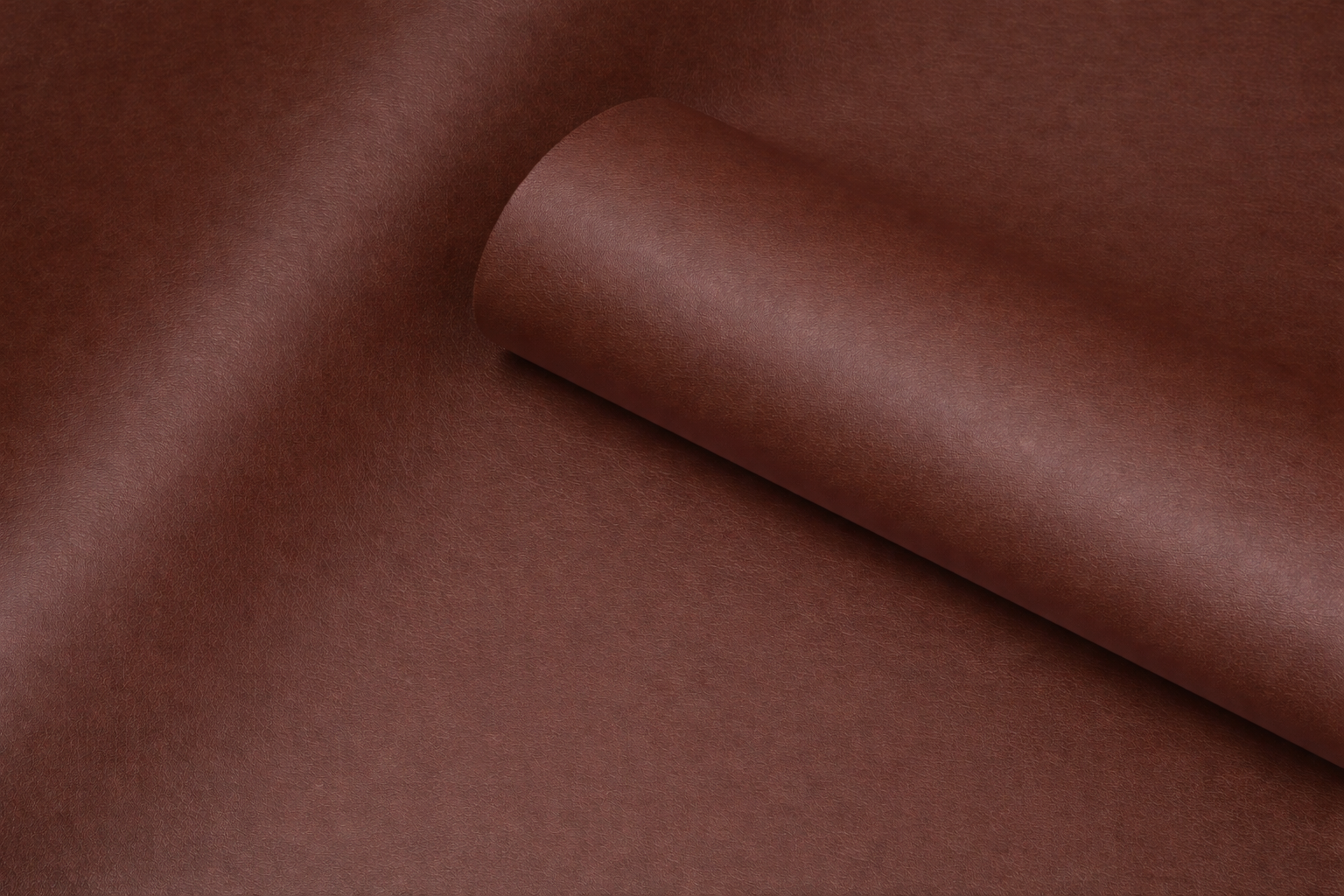
28 Oct Plant-Based Leather vs PU vs PVC: What Is the Difference?
Walk through any material library and you will find PU leather, PVC leather and plant-based leather sitting side by side, often looking almost identical. Underneath, they are very different materials. Knowing those differences helps you choose the right one for performance, cost, compliance and sustainability goals.
What is PU leather?
PU leather is a textile backing (usually polyester or a polyester-cotton blend) coated with one or more layers of polyurethane. It is soft, flexible and relatively breathable compared with PVC, which is why it is common in fashion, footwear and furniture. Polyurethane is made from fossil-derived chemicals, and solvent-based PU processes use solvents such as DMF (dimethylformamide), which is now restricted in the EU. Water-based PU systems reduce that concern.
What is PVC leather?
PVC leather (often sold as “vinyl” or “leatherette”) is a backing fabric coated with polyvinyl chloride. On its own PVC is rigid, so plasticisers are added to make it soft; some plasticisers, such as certain phthalates, are restricted in many markets. PVC is tough, water-resistant and inexpensive, which makes it popular for heavy-wear upholstery, but it is less breathable, can stiffen with age and raises concerns at end of life, particularly if it is burned.
What is plant-based leather?
Plant-based leather replaces a large part of the fossil-derived content with renewable plant material: agricultural residues, fruit waste, plant fibres or mycelium, held together with a binder and usually built on a textile backing. The share of plant content varies widely between products, from minor additions to the majority of the material. Read our complete guide to plant-based leather for the basics.
Side-by-side comparison
| PU leather | PVC leather | Plant-based leather | |
|---|---|---|---|
| Main raw material | Polyurethane (fossil-based) | Polyvinyl chloride + plasticisers (fossil-based) | Plant fibres or residues + binder |
| Renewable content | Low, unless bio-based polyols are used | Very low | Moderate to high (check certification) |
| Feel | Soft, supple | Firmer, can feel plasticky | Natural, leather-like hand; varies by product |
| Breathability | Moderate | Low | Moderate; depends on formulation and top coat |
| Key chemical watch-outs | Solvent residues (e.g. DMF) | Plasticisers, chlorine content | Binder chemistry; ask for SVHC and Prop 65 data |
| Animal-free | Yes | Yes | Yes (look for vegan certification) |
Performance: can plant-based leather keep up?
Well-engineered plant-based leathers are designed to match synthetic leathers on everyday performance, including abrasion, flexing, tear and tensile strength. Performance depends on the formulation, the backing and the top coat, so the right question is not “is plant-based leather durable?” but “does this material pass the tests my application needs?” Our guide to evaluating plant-based leather explains which tests matter.
Sustainability: the real difference
The biggest difference is where the carbon in the material comes from. In PU and PVC it comes almost entirely from fossil sources. In plant-based leather a large share comes from plants that absorbed CO₂ as they grew, and, in the case of agro-residue materials, from waste that would otherwise be burned. Bio-based content can be measured independently using radiocarbon testing (ASTM D6866), the method behind the USDA BioPreferred® certification. To compare full environmental impact, look at a life cycle assessment (see understanding LCA).
Which one should you choose?
- Choose PVC where cost and extreme wipe-clean durability are all that matter, and sustainability claims are not part of the brief.
- Choose PU for a soft synthetic with broad availability, ideally a water-based or partly bio-based grade.
- Choose plant-based leather when you need leather-like aesthetics and performance with verifiable renewable content and a stronger sustainability story.
Terratan™ is a plant-based leather alternative made from agricultural residue and bio-based binders. It is a USDA Certified Biobased Product, PETA-Approved Vegan and California Prop 65 compliant, and it is made in rolls that run on existing cutting and stitching lines.
Work with Terratan
Terratan™ is Bharat Biomaterials’ plant-based leather alternative, made from agricultural residue and produced in continuous rolls in India. Explore the material, read about our sustainability approach, or contact our team to request the technical data sheet and samples.

Sorry, the comment form is closed at this time.