

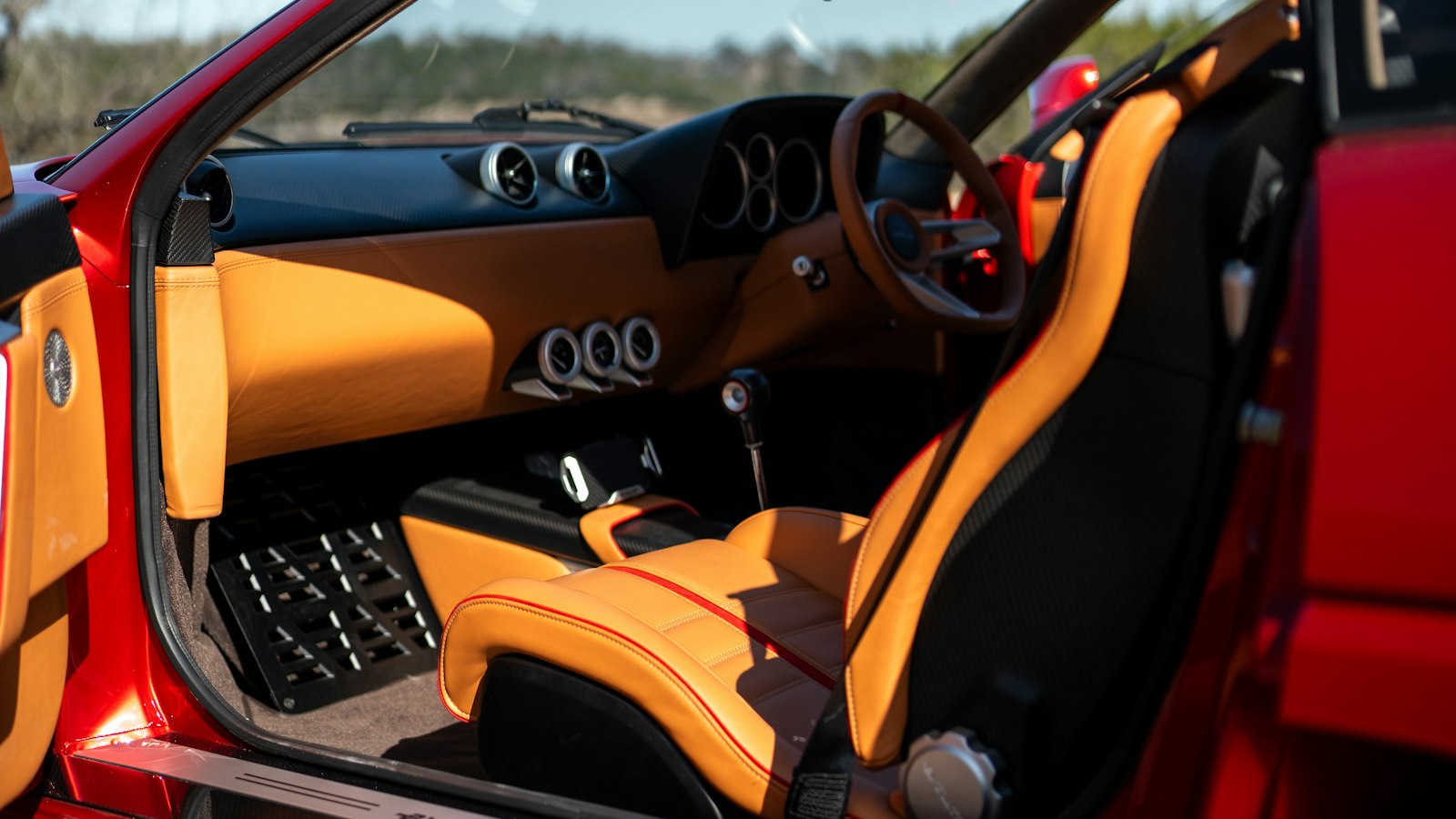
28 Oct Plant-Based Leather for Automobiles: Opportunities and Challenges
Vehicle interiors are changing fast. Electric vehicles have made sustainability central to how cars are designed and marketed, and many manufacturers now offer animal-free interiors or have set targets for recycled and bio-based materials. Plant-based leather is one of the most promising options, but automotive is also one of the most demanding applications for any material.
The opportunity
- Decarbonising the interior: as tailpipe emissions fall, the materials used to build a car become a bigger share of its total footprint.
- Animal-free demand: many buyers, especially of premium EVs, want vegan interior options.
- Bio-based content targets: manufacturers increasingly track renewable and recycled content in their vehicles.
- Brand story: a material made from agricultural waste gives designers a tangible sustainability story to tell.
Where it can be used
Seat inserts and bolsters, seat backs, headrests, armrests, door panels and inserts, dashboard and console wraps, steering-wheel covers, sun visors, and interior accessories. Different parts have different requirements: a seat bolster sees much more abrasion than a door insert.
The challenges: automotive requirements
Every manufacturer has its own material specifications, but most cover:
- Abrasion and wear: Martindale or Taber testing, often with high cycle targets for seating.
- Flex and cold crack: resistance to repeated flexing, including at low temperatures.
- Light fastness and heat ageing: interiors face strong sunlight and high cabin temperatures.
- Hydrolysis and humidity resistance over the vehicle’s life.
- Flammability: FMVSS 302 or ISO 3795 burn-rate requirements.
- Fogging and emissions: limits on volatile compounds that cause windscreen fogging and odour (for example DIN 75201 and VDA 270/278).
- Seam strength and stitch tear for sewn trim, plus soiling and cleanability.
- Consistency and supply: tight colour and grain tolerances across large volumes, with full traceability.
Development usually goes through material qualification, part trials, validation testing and supplier approval. It takes time, so early collaboration between material suppliers, tier-1 trim suppliers and OEM design teams is key.
What makes a material automotive-ready
- A stable, consistent roll-to-roll process
- Backings engineered for stretch and moulding (often polyester knits)
- Robust top coats for abrasion, light and cleaning
- Full documentation: technical data sheet, SDS, chemical compliance and test reports
- Willingness to co-develop and run trials
Terratan for automotive interiors
Terratan™ is produced in consistent rolls by transfer coating and can be engineered with different backings, including polyester, thicknesses from 0.6 to 1.5 mm, and custom colours and grains. We work with automotive and trim teams through sampling, technical evaluation and development trials. For a general guide to testing, read how to evaluate plant-based leather.
Work with Terratan
Terratan™ is Bharat Biomaterials’ plant-based leather alternative, made from agricultural residue and produced in continuous rolls in India. Explore the material, read about our sustainability approach, or contact our team to request the technical data sheet and samples.

Sorry, the comment form is closed at this time.