

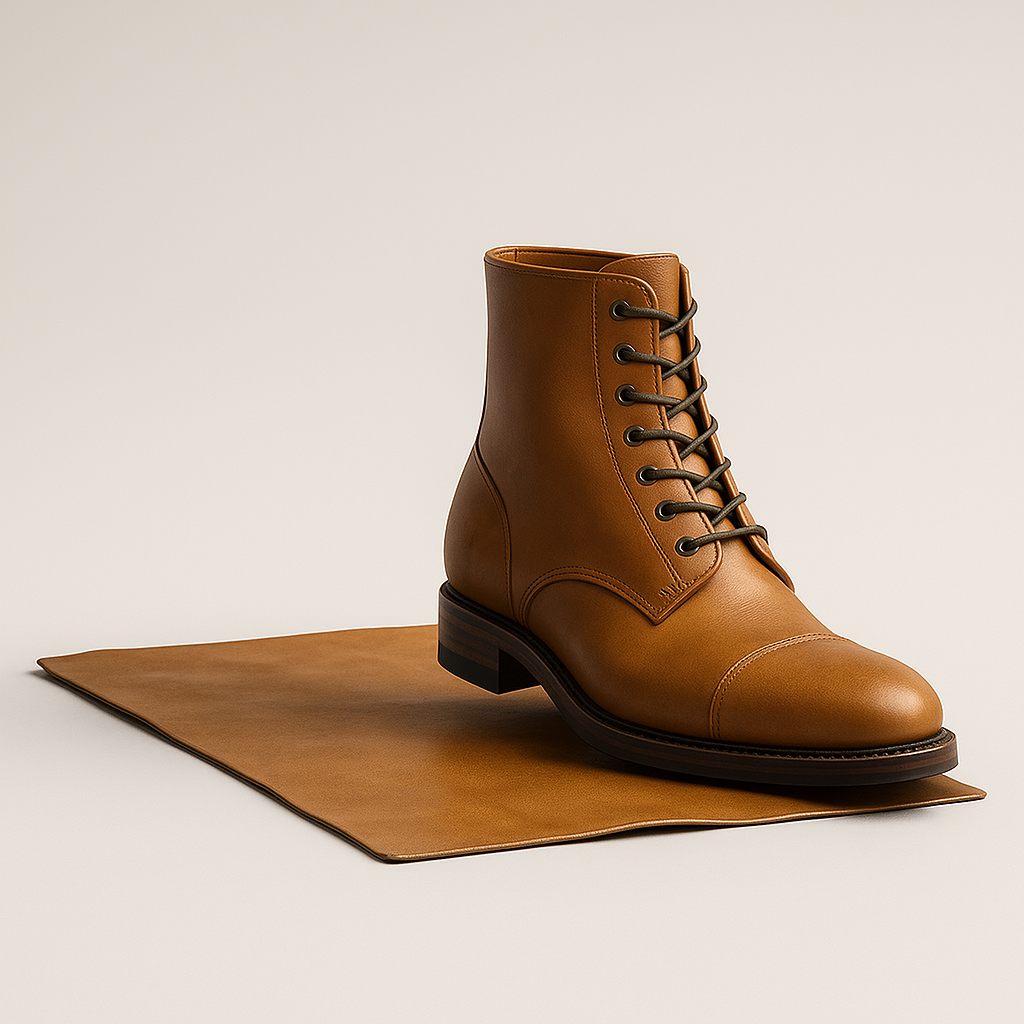
28 Oct Plant-Based Leather in Footwear: What Designers and Manufacturers Need to Know
A shoe upper is flexed thousands of times a day, scuffed, soaked and stretched over a last. That makes footwear one of the toughest applications for any leather alternative, and one of the most rewarding when it works. Here is what designers and manufacturers should consider.
Where plant-based leather works in footwear
- Uppers for sneakers, casual shoes, loafers, sandals and boots
- Overlays and trims: heel tabs, eyestays, toe caps and logos
- Linings and sock liners, where breathability and comfort matter
- Straps for sandals and slides
The key performance requirements
Flex resistance
The upper creases at the vamp with every step. Flex testing (for example ISO 17694 for uppers, or the Bally flexometer method) checks for cracking after tens of thousands of cycles, sometimes at low temperature for winter footwear.
Lastability and elongation
Uppers are pulled tightly over a last and must hold the shape. The material needs enough elongation to last without tearing, and enough recovery to keep the shape. Backing choice is decisive here.
Tear and seam strength
Stitched seams and eyelets concentrate stress. Check tear strength and stitch-tear performance, especially at lighter thicknesses.
Abrasion and scuff resistance
Toes and heels take the most wear. Martindale or Taber abrasion results, plus colour fastness to rubbing, indicate how the surface will age.
Comfort and breathability
Water-vapour permeability affects comfort, especially in closed shoes. Combine the material with breathable linings where needed.
Manufacturing tips
- Thickness: 1.0–1.2 mm is a common starting point for uppers, lighter for linings and trims.
- Cutting orientation: check stretch direction and cut panels consistently.
- Skiving and folding: test edge folding and skiving on your machines.
- Adhesives and heat: confirm compatibility with your cementing adhesives and with heat-setting and activation temperatures.
- Run a wear trial on finished pairs before full production.
For specifying the material, see choosing thickness, texture and backing.
Telling the story
Footwear customers increasingly look for vegan and lower-impact options. Certified vegan status and verified bio-based content give brands claims they can make with confidence on hang-tags and product pages.
Terratan for footwear
Terratan™ is a plant-based leather alternative made from agricultural residue, produced in consistent rolls and available in thicknesses from 0.6 to 1.5 mm with different backings, colours and grains. It is PETA-Approved Vegan and a USDA Certified Biobased Product. Request a sample length to prototype on your own lasts; see how to access Terratan.
Work with Terratan
Terratan™ is Bharat Biomaterials’ plant-based leather alternative, made from agricultural residue and produced in continuous rolls in India. Explore the material, read about our sustainability approach, or contact our team to request the technical data sheet and samples.

Sorry, the comment form is closed at this time.